As the year winds to an end, the Bogotá Post looks back at 2025 in Colombia
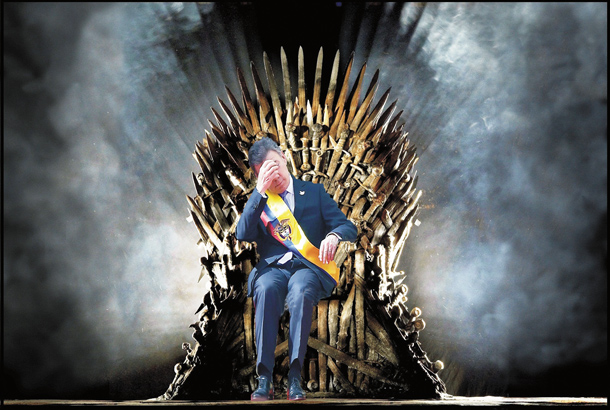
2025 might well be looked back upon in years to come as the calm before the storm. An early sign of the potentially troubled waters ahead was the assassination of Senator Miguel Uribe in early June. Other themes included friction with the US, political deadlock and a sense that much is being put off for next year.
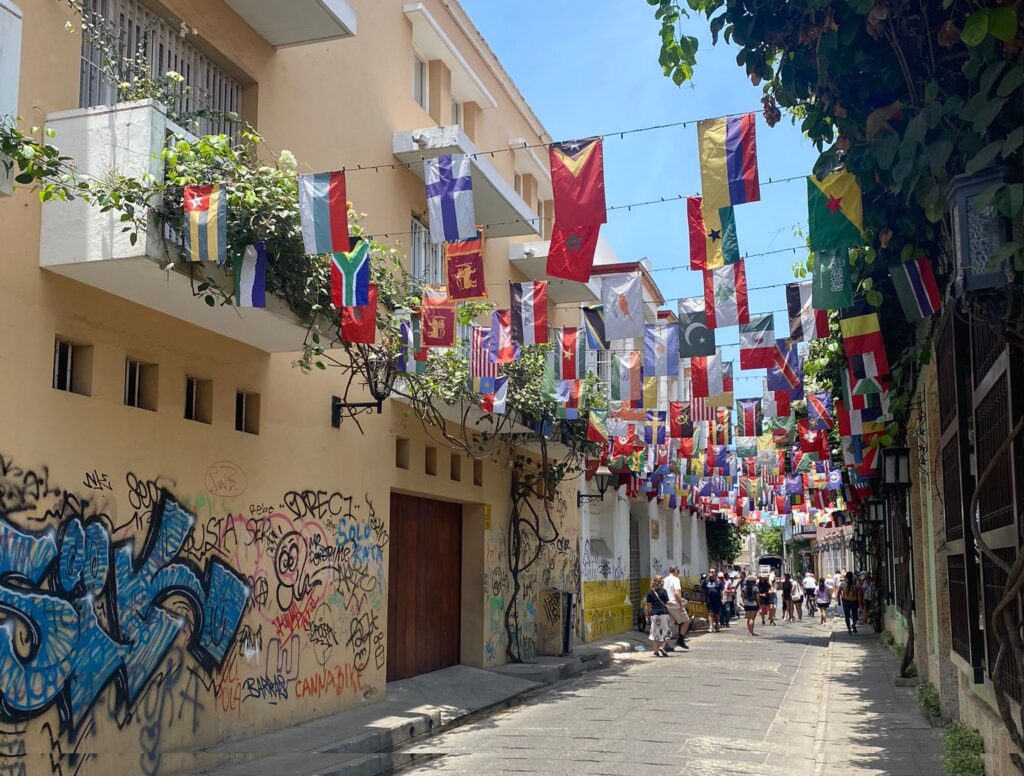
Relations with the USA started badly after Trump was sworn in, as he deported Colombian immigrants in chains on military planes. Petro at first refused to receive the flights, before relenting and allowing them to land but greeting the travellers and treating them with dignity.
From there it got worse, with Petro turning up on the New York streets protesting while on a visit to the UN. Trump in turn has no love for Petro, calling him a bad guy and putting him and his family on the Clinton List, alongside highly controversial longtime advisor Armando Benedetti. It also emerged at that point that Petro had separated from Veronica Alcocer some time ago.
After the US started bombing alleged narco ships in international waters in the Caribbean, things took an even darker turn. Petro, like most world leaders, was highly critical of US operations in the Caribbean, leading Trump to warn that “he could be next”.
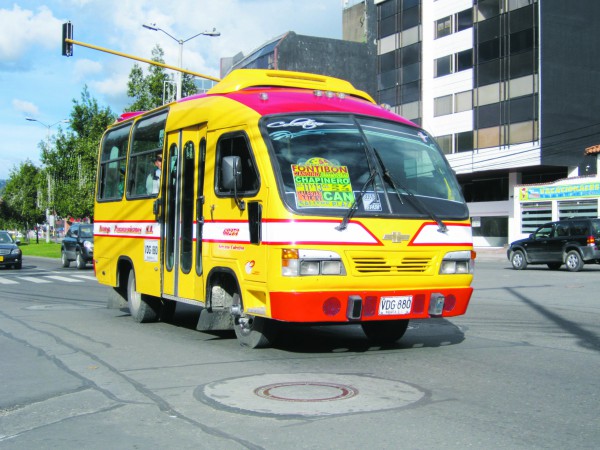
Bogotá herself kept on with business as usual, although that’s not always a good sign. Mayor Gálan has little to show at the mid point of his time in the Palacio Liévano. Crime and rubbish are the most visible signs of a city that sometimes feels stuck in place, although the Metro seems to be on track.
Away from the febrile world of Colombian politics, there was plenty going on in cultural fields, from an impressive Copa América run by the superpoderosas to possibly the best festival Cordillera yet in Bogotá.
Violence mars the start of 2026 campaigning
Senator Miguel Uribe was assassinated at the start of his electoral bid in a worrrying reminder of what can happen in Colombian politics. The politician was shot a number of times in the head while making a visit to Modelia and put into intensive care for a month before passing.

One shooter, just 15 years of age was shot and captured at the scene by Uribe’s protection. Other suspects and accomplices were relatively quickly captured, although the intellectual author of the crime remains unclear. While social networks have been hothouses of rumours and propaganda, candidates have thankfully so far stayed largely clear of commenting.
Runners and riders for the presidency have emerged and started the process of thinning the field. The Liberales, Conservadores and Cambio Radical are yet to declare their representatives. However, there are still six candidates for political parties and another 14 who have acquired the requisite 635,000 signatures to run as independents.
Among the latter names there are some big names such as Claudia López, Luis Murillo, Abelardo de Espriella and Vicky Dávila. There’s also a number of seeming no-hopers, but remember that was Rodolfo Hérnandez this time last year and he got to the second round as a semi-protest candidate.
Iván Cepeda is Petro’s successor candidate for Pacto Historico, while the Centro Democrático have plumped for Paloma Valencia. Sergio Fajardo is back in the race again, for Dignidad y Compromiso. That means no place for some high profile heavyweights such as Maria Fernanda Cabal, Susana Muhamed and Gustavo Bolívar.
High-profile roadblocks, change by the back door
One of the constants in Colombian politics in 2025 was that major reforms and were blocked and delayed, yet a few things were snuck in through alternative measures. This was exemplified by Petro declaring economic emergency in a constitutionally dubious manner.
The reforma de salud was sunk again in the springtime, but by mid-year MinSalud had gone ahead with some of the changes anyway. This may well be reversed by an incoming government next year, meaning that EPSs remain somewhat in limbo.
Major budget changes are unlikely to get through under anyone, so failing to get this done can’t really be laid at Petro’s door. However, he’s gone ahead with what he can do: enormous hikes in the minimum salary, IVA abolished on certain items, demanding that pension funds divest from foreign investments and repatriate their savings.
Paz Total is looking more and more like Fracaso Total as time ticks on. At best, talks with various groups are going nowhere, while other talks have essentially collapsed. Trump declaring the Gaitanistas a terrorist group has muddied the waters even further. The ELN, Colombia’s largest remaining guerilla force, in particular have intensified operations.
While some of that has underlined the difference between their rhetoric and reality, with December’s paro nacional affecting little of the country, other attacks have been bloody and worrying, with the increased use of drones a dangerous direction of travel.
Economic uncertainty?
Whether the economy is doing well or not and whether that is because or in spite of the government will depend mainly on your fellings towards Petro. It’s a mixed bag with plenty of caveats on both sides. GDP growth has been good and ahead of expectation, with unemployment continuing to fall and inflation slowing. Those new jobs are largely formal, too.
However, the GDP growth isn’t as fast as it could be, while it’s outperforming regionally, it’s behind the global average. Unemployment is at a low point for the century, but is still mainly informal and the rate of decrease is slowing. It’s hard to guess how the recently announced minimum wage hike to COP$2,000,000 will affect this.

Much more worrying is that much of this may be built on sand. While Petro has struggled to get big-ticket bills through the legislature, he’s quietly done things behind the scenes that have ramped up public spending. He’s betting on that being an investment which will keep delivering in the long run. If not, it will be an albatross for future governments.
Inflation remains at 5.3% annually, not calamitous, but stubbornly high. The cost of living, too, is ever-increasing, not helped by uncertainty in global trade routes. Despite all that wind and bluster between Trump and Petro, tariffs remain at the standard 10% for the time being.
Petro finally got his reforma laboral over the line, in some ways a major achievement considering the opposition it faced in the Senate. However, the text of the bill is somewhat underwhelming. For the main part, there are minor changes such as a cap on overtime and night shifts starting two hours earlier as well as solidifying full time contracts as the norm.
The most substantial change is a commitment to make online providers such as Rappi pay social security and workplace risk contributions for their workers. This may find the devil is in the details in terms of bringing it into reality.
Colombia also brought the Bre-B system of instant payments online. This is already having a huge impact in a country where digital payments are widespread and popular. Long term, this provides a base for increasing transparancy and reducing corruption. However, questions remain over the infrastructure underpinning these systems.
Transport no longer stuck in a jam
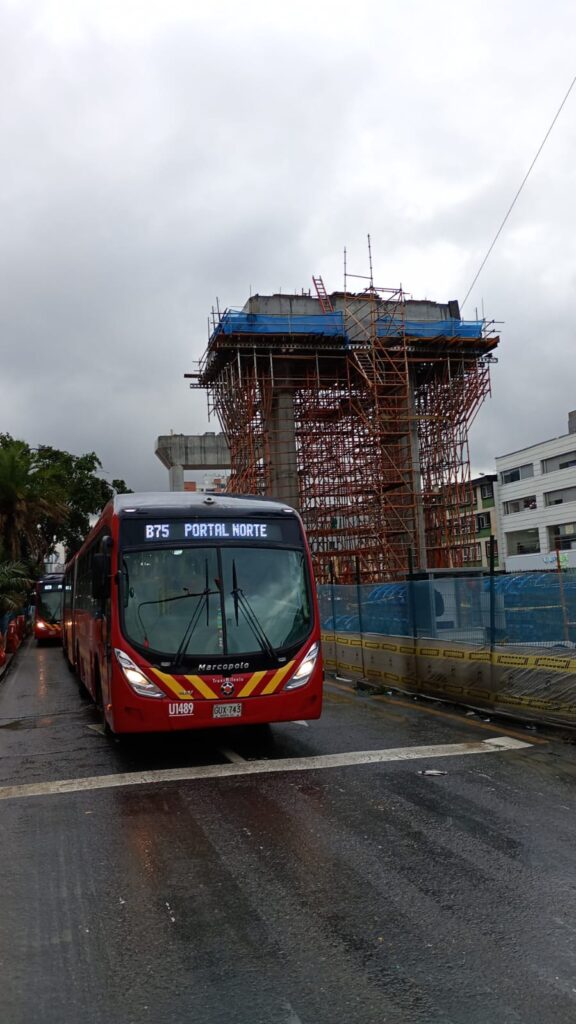
The really big local news has been that the Metro is progressing as planned. This might not seem like big news, but given how long the project spent in planning and the tendency of the president to stick his beak in, it’s just good to see something being done.
The first trains have arrived in the country and are running tests while the towering columns of the track are in place all over the city. Today, that means pain as Transmi stations close and traffic is rerouted, but all is in place for a fully integrated public transport system in the future.
RegioTram is also more or less on schedule, although it will need to be reworked to connect with the Bogotá systems, after it was pointed out that the planned stations are a fair distance away from the trnasmi and Metro. Regardless, connecting satellite towns with the capital is a gamechanging proposal.
Life in the city remains irritating due to continued high crime levels and the seeming refusal of Carlos Fernando Galán to do anything about rubbish on the streets. The best that can be said about Gálan at this point is that he has done little of note, hardly a glowing resumé, given his ambitions coming into office.
Culture vultures

The capital saw a celebration of Latino music as Festival Cordillera 2025 confirmed the event’s stature as a lodestone of music in Colombia. With Festival Estéreo Picnic 2025 providing a balance that focuses on anglophone music, the capital is well set. However, with both those festivals in the Parque Bolívar, Rock al Parque is struggling to stay relevant.
Plenty of other bands were touring throughout the year too, with Bogotá increasingly on the map for big-name world superstars. That means enduring the likes of Guns N’ Roses, but also means that rolos can see contemporary stars like Dua Lipa.
Former busker Ed Sheeran popped up on stage as a surprise guest of J Balvin in December, while another Brit unsurprisingly failed to turn up because that’s what Morrissey does these days. Latinos across Instagram responded by trolling the famous vegetarian with meat recipes.
Elsewhere online, Colombian food performed well on a host of dubious internet polls, sparkign waves of reposted joy throughout the year. In more dispiriting news, Club Colombia Negra was discontinued by Bavaria, meaning you have few chances to neck the country’s last widely available dark lager.
For those more interested in staying home, Colombia’s first ever board games convention took place in November. Ludotopia was an undisputed success, attracting the likes of Wingspan artist Ana Maria Martínez (who teased the upcoming expansion for Wingspan South America, Central America and Caribbean) and proving that Bogotá retains a dynamic and evolving cultural scene.
Colombia fall just short again
The women’s football team came into the Copa América on good form and were within seconds of taking the title. With two minutes of regular time to go, Mayra Ramírez put Colombia ahead for the third and seemingly last time at 3:2. Brazilian superstar supersub Marta, in her last tournament, broke Colombian hearts as she rolled back the years with a last gasp equalizer in the sixth minute of injury time.
The drama wasn’t over, as she then put Brazil in front for the first time in extra time before Leicy Santos equalized and took the game to penalties. There, the game slipped through the fingers of the superpoderosas as perma-champions Brazil showed their experience. They took the shoot out 5:4 for their 9th title in ten Copa Américas.
The men’s team, also runners up in their Copa América, ground their way to qualification for next year’s World Cup in North America. Conmebol was a slogfest this time around, with everyone except Argentina involved in taking points off each other and goals in short supply.
Eventually, Colombia found form, only losing a single game in the year and finishing with a goalfest against Venezuela, beating their fierce rivals 6-3 in the last game. That leaves Colombia 13th in the FIFA rankings – unlucky for some maybe, but not coach Nestor Lorenzo.
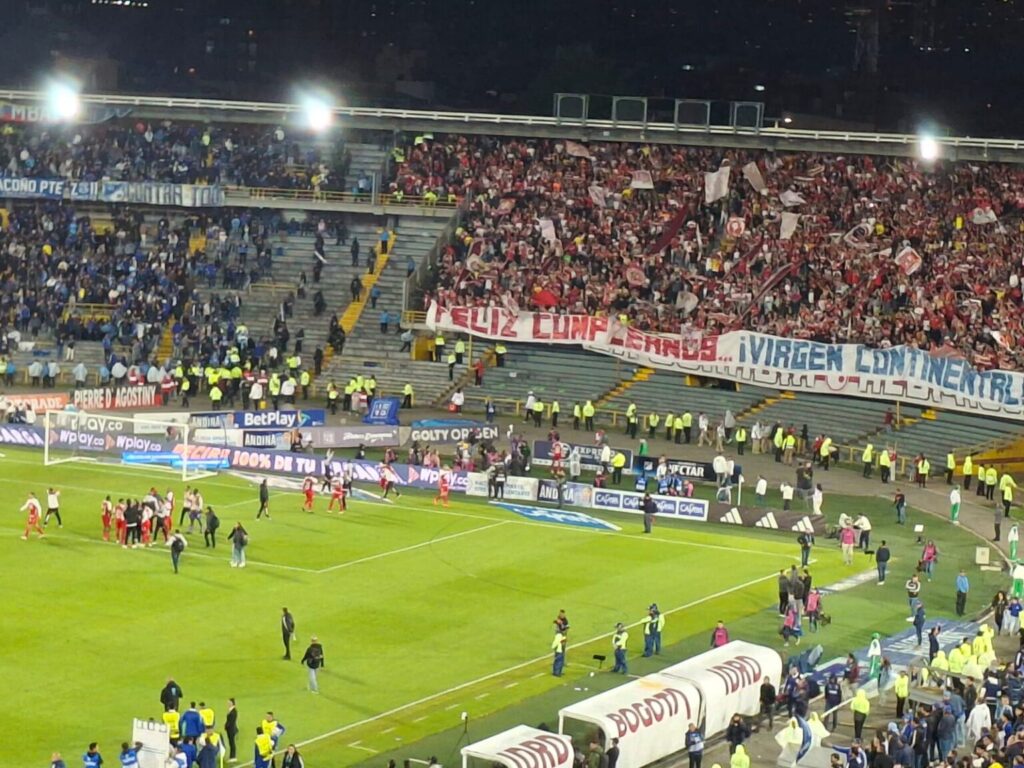
On the local stage, Santa Fe reclaimed the liga apertura for Bogotá, triumphing in Medellín over Independiente thanks to an inspired performance from Wigan legend Hugo Rodellega. Knocking out Millos and El Tigre Falcao on the way made it even sweeter. Junior of Barranquilla took the finalizácion, with Nacional winning the Copa Colombia. The latter was a Medellín derby and marred by a pitch invasion and violence at the end.
Cricket Colombia hit a six as MinDeportes officially recognised the gentleman’s game as a sport in the country. This opens up the field for more funding and support for events. They also welcomed a visiting team from Trinidad and Tobago as well as setting a T20 record for a last wicket chase in the Gulf Series against México.
What’s coming next?
Next year promises much more drama in Colombia, with national elections set to be hard-fought. This is an unusual cycle, as the country is preparing to see who will succeed a leftist president. Whether there will be continuity, a sharp tack rightwards or a drive for the centre is still anyone’s guess.
The lineups for the capital’s big music festivals seem strong, with a supporting cast of superstars also set to tour. The men’s football team have a relatively straightforward group in the World Cup and will fancy themselves to do well.
Our predictions for 2026 will be coming in the next few days, but whatever comes to pass, we’ll be here to keep you in the loop with what’s happening in Colombia and why. We got some of the 2025 calls right, after all. right Happy new year from the Bogotá Post – your English voice in Colombia!