The dismantling of a major crime gang which operated in Bogotá caused controversy last week after it emerged its leader was declared a peace negotiator under President Petro’s controversial Paz Total, or Total Peace, plan.
National police rounded up 23 members of the La Mesa gang in simultaneous operations in Tolima, Cesar and Bogotá. According to police reports, the gang was involved in serious crimes across the capital since 2012, including drug trafficking and murders.
News of the arrests was tainted by the fact that under the Paz Total process – the Petro government’s wide-ranging negotiations with armed groups – gang leader Gustavo Adolfo Pérez Peña, alias El Montañero, had his arrest warrant suspended under his role as gestor de paz, or ‘peace facilitator’.
The kingpin’s release sparked a furious response from Bogotá mayor Carlos Galán, who accused Petro of undermining the city’s efforts to curb crime.
“While in Bogotá,…the prosecutor’s office and the police, with the support of the Bogotá mayor’s office, are working to capture and dismantle a criminal gang dedicated to serious crimes, the national government appoints the leader of that gang as a peace facilitator and lifts the arrest warrant for him,” he railed.
The gang was also suspected of being behind last year’s gruesome killings where pieces of the bodies of victims were wrapped in plastic bags and dumped on the city’s highways.
A free pass for career criminals like Pérez Peña makes fighting crime “incredibly difficult,” added Galán.
Dodging a warrant
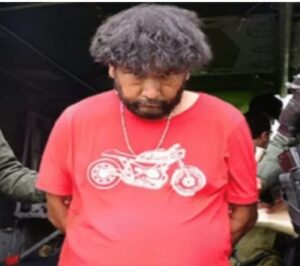
Details of La Mesa’s criminal activities released by the prosecutor’s office this week showed the gang originated in Bello, Antioquia, but spread to Bogotá in 2012.
Court documents reported in local news outlet El Colombiano paint Pérez Peña as a hardened criminal; he has been imprisoned four times, including for armed robbery, homicide and illegal possession of firearms, but was freed before serving his full sentences.
His rap sheet includes attacks on armored trucks, notably a cash heist in Bogotá in 2003 where a policeman was shot dead.
Pérez Peña’s most recent jailing was in 2019 when he was sentenced to eight years for conspiracy to commit a crime and illegal possession of firearms. It was during this stint that he was freed as a peace facilitator.
And even while the La Mesa gang has been rounded up this week with members facing multiple charges and long prison sentences, its leader and founder continues at liberty.
Get out of jail free?
Inclusion of criminal gangs in the Paz Total process has proved one of the thorniest aspects of Petro’s flagship policies and a political hot potato in the run-up to next month’s presidential elections.
Since its inception in 2022, the government’s peace negotiators have tried to include some of Colombia’s most embedded crime dynasties under the acronym Estructuras Armadas Organizadas del Crimen de Alto Impacto (EAOCAI).
This Paz Urbana, or urban peace, initiative is based on the reality that in Colombia today lines are blurred between organized armed groups and engrained criminal structures. Much of its effort has focused on Antioquia’s Valle de Aburrá, around Medellín, where many crime gangs took root after the fragmentation of the 1980s cocaine cartels.
The president’s office recently declared the process a partial success, claiming that the nominated peace spokespersons – many feared capos with violent histories – were now in a dialogue process which could “prevent further violence and prevent the resurgence of these structures”.
Many critics have predicted that – similar to the Paz Total process with large guerrilla groups – criminal gangs will leverage the negotiations to their own interests to gain time and territory or a get-out-of-jail-free card.
This week Medellín’s mayor Fico Gutíerez welcomed a resolution by the attorney general’s office to overturn many of the 23 nominations of local crime bosses as peace facilitators.
“The resolution removes 16 criminals currently serving sentences for serious crimes from the program. Seven remain eligible for the benefit,” he posted on X.
He also echoed Galán’s complaint that hardened criminals were being included in the peace process. “It is unacceptable that the Petro government has asked the prosecutor’s office to lift the current arrest warrant for homicide.”
Peace as a right
Defenders of Petro’s agenda hit back reminding that Paz Urbana was part of a constitutional process protected by Colombian law.
“Peace is a right, not a political strategy,” said Isabel Zuleta, a senator and key player in the Paz Total process.
The senator, who represents the government at the negotiating table with representatives of criminal gangs, accused the media and politicians of misreporting the negotiations.
“For nearly three years, a serious path toward de-escalating urban violence in Medellín and the Aburrá Valley has been painstakingly forged. Today, that work is being exploited by right-wing sectors that prefer to sabotage urban peace rather than acknowledge progress that is not electorally advantageous to them,” she said.
Zuleta also pointed out suspension of arrest warrants for gang leaders seeking peace did not free them of responsibilities for crimes they committed, nor would it stop judicial investigations.
Meanwhile, a mix-up between Petro’s government and Attorney General’s Office emerged over Antioquia’s urban peace process: 16 of the 23 capos named as peace negotiators were already in prison, so suspending their “arrest warrants” was nonsensical as they were already detained in the high-security Itagüí Prison.
“We truly never imagined that a request would be made to suspend arrest warrants for people already serving sentences,” chief prosecutor Luz Adriana Camargo told Caracol Radio.

Prison party
For this judicial – rather than political – reason, Camargo revoked the suspension orders for the 16 capos already doing time.
“We are talking about dialogues inside a prison with convicted individuals,” she said.
The Attorney General’s office also corrected widespread fake news – amplified by right-wing presidential candidates Paloma Valencia and Abelardo de la Espriella – that the 16 jailed crime chiefs would be freed as part of the Paz Urbana negotiations.
In fact, there were no plans to release the IItagüí peace facilitators, clarified Camargo’s office.
But in a further twist this week the government froze the peace talks in the Itagüí Prison after revelations that the jailed capos mounted an unauthorized vallenato concert by popular singer Nelson Velásquez, reportedly costing 500 million pesos (US$140,000).
For many commentators, the partying in the prison brought back painful memories of drug baron Pablo Escobar’s luxury lifestyle while supposedly imprisoned by the state in the 1990s.
Meanwhile the chief prosecutor Camargo came under fire for her decision to suspend warrants for seven other gang leaders currently on the run – including that of Pérez Peña of La Mesa.
This week the exact whereabouts of Pérez Peña was unknown, as was his willingness to engage in any peace process. According to a report by TV station Teleantioquia, the La Mesa gang leader was based in Madrid, Spain, while “moving around Europe as a sophisticated tourist”.
For El Montañero, coming home to Colombia, even under the guise of a peace facilitator, could be less of a holiday.