Colombia goes off to the polls for the first time tomorrow – but what’s at stake in the first Colombian election of 2026, how does it all work and why are there claims of fraud?
National elections are taking place in Colombia in 2026, with the first taking place tomorrow morning, Sunday 8th March. This returns representatives for both houses of parliament as well as eliminating some candidates for the presidential elections coming in May.
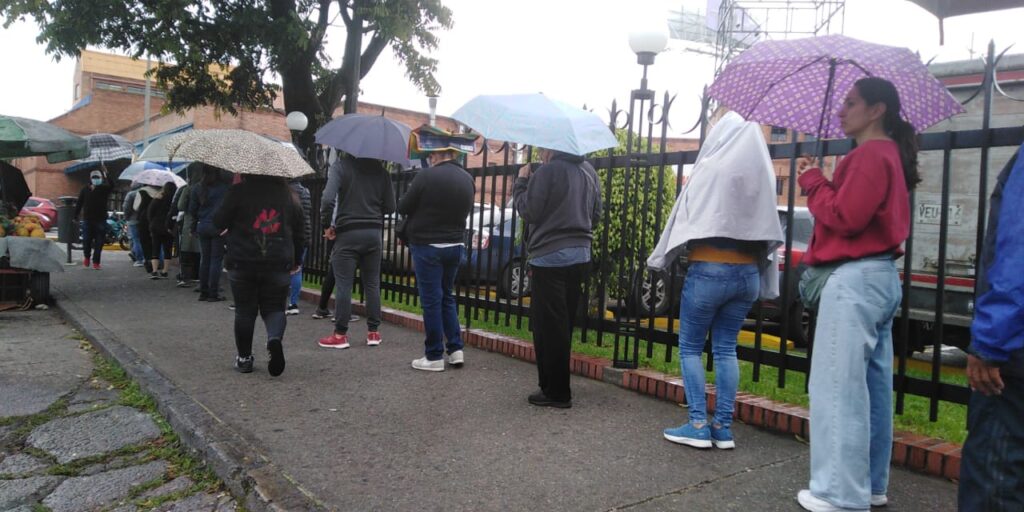
Oversight is carried out by the CNE (Consejo Nacional Electoral). In order to do this over the vast territory and number of stations, over 800,000 citizens are selected to be vote-counters. This is similar to jury duty in other countries and is compensated with a day off as well as a compulsory day of training a couple of weeks beforehand.
As the electorate is growing, there are now some 13,000 voting sites across the country, most with multiple voting tables. Colombians have to vote where their cédula is registered, so don’t be surprised to see some people trekking to other cities if they forgot to update their registration.
Borders will close, along with various road closures within city limits and ciclovía cancelled to allow for ease of transport to voting stations. There will also be a dry law enacted from this afternoon and you can expect a heightened police and military presence.
This is the first year in which the parties representing demobilised ex-FARC combatants do not receive guaranteed seats and is also the first time the leftist bloc is coming in as incumbents rather than opposition.
With plenty of rhetoric and conflict in the run up to the election as well as the unusual political situation of the country, these are particularly hard elections in Colombia to call. While the upcoming presidential elections in May are the bigger deal, this round will give some insight into how that might go.
What’s on the table in the Colombian elections 2026?
Both houses of parliament will be fully elected, which means 103 senators and 183 representatives for the lower house, known as the Cámara de Representantes. The key difference in choice here is whether you vote regionally or nationally.
The Senate is voted for on a national basis, with all candidates open to all voters. Of the 103 curules, a straight 100 are chosen by the electorate as a whole, while Indigenous communities select a further two and the runner-up in the presidential election will receive the final seat.
The Cámara is regionally organised, with residents of the capital voting for Bogotá-based candidates and so on. Bogotanos have 18 representatives in total, whereas departments are guaranteed a minimum of two seats. Like the Senate, there are also seats set aside for special groups: afro-Colombians, Indigenous Colombians and conflict victims.
Just in case you thought there was enough on the plate, there are further considerations at stake. To avoid spreading the vote, various presidential candidates with similar positions group together for a preliminary vote. The losers in each consulta will drop out on Monday. This year there are three on the voting card.
They are leftist, rightist and centrist. Ex-mayor of Bogotá Claudia López is nailed on for the latter and ex-mayor of Medellín Daniel Quintero is likely to win the former. The rightist consulta is more open, with Paloma Valencia of the centro democrático leading polls but Juan Daniel Oviedo and Juan Galán eyeing the outside chance of an upset.
While there is a diverse group of parties, they hang together in loose blocs roughly delineated as government, opposition and neutral. With the government only controlling 34 curules and the opposition 24, the neutrals are incredibly important for horse-trading.
This will be a huge litmus test for the ruling leftist bloc. They will lose their guaranteed Comunes seats, so any further losses will be highly problematic. On the other hand, gaining curules would be a huge shot in the arm in terms of public support, hence why they are campaigning in places like Huila, outside of their traditional strongholds.
Continuity candidate for presidency Iván Cepeda continues to lead polling by a healthy amount, but is closer to Petro’s numbers in 2018 than 2022, which will be a concern. A good performance tomorrow will help him out considerably.
Within the consultas, Paloma Valencia’s support will be the big question. She’s likely to win, but the percentages will be a big sign as to whether she can truly challenge Abelardo de la Espriella for the rightwing vote.
The most likely outcome is that there will be little change in the makeup of the Senate, with neither the government nor opposition likely to take outright control or make large gains. Whichever of those two groups increases their representation will quickly turn it into a sign that they are on the right track and use that as support for their presidential campaign.
What’s the background to these elections?
The run-up to the first Colombian elections of 2026 has seen a lot of criticism of the system, almost all of it coming from the national government. President Gustavo Petro has been front and centre on this issue, repeatedly questioning the neutrality of the elections.
Petro’s concerns rest on the fact that Thomas Greg and Sons handle the software used in the election system, a firm that he’s clashed with repeatedly, especially over Colombian passport printing.
He says that the systems are opaque and he has not received answers from the CNE or Registraduria over various concerns he has. However, both groups, along with Colombia’s neutral election observers MOE have been clear about the processes.
Online, there are hundreds of posts claiming that a key part of the alleged fraud will be in the reports made by the jurados. This echoes previous elections, where there was a flurry of images purporting to show electoral forms that had been altered. With AI entering the scenario, expect more of this from midday or so tomorrow onwards.
Of course, Petro is only claiming that electoral fraud exists against him, not in the multiple occasions in which he’s won at the voting urns. This is a well established populist tactic – calling elections into doubt before they happen. It’s likely to rally his turnout and provide an excuse if results are bad.
There is little credibility to most of the vote rigging claims. Colombia does indeed have some serious problems around corruption and influence buying, but this tends to be concentrated in rural zones in the periphery of the country. It’s also worth noting that these seats return candidates from across the political spectrum.
A lot of electoral impropriety is very hard to prove – the machines that promise to deliver blocks of votes are well-versed in legal limits and plausible deniability. Offering someone some free gifts in return for ‘support’, for example, is widespread and while dubious hard to prove in court.
It goes without saying that political attacks on the CNE are particularly unhelpful, especially in what is still a very charged political atmosphere nationwide. The assassination of presidential pre-candidate Miguel Uribe last year was a shock to a country that has a long history of political violence.
Concerns remain over both electoral safety and fraud in much of the country, with over 200 municipios at high risk of fraud and/or violence. 39 of those are classed as very high risk and only 167 at very low risk, mainly in the Andino region.
How does the system work?
Every Colombian over the age of majority (18) and with a correctly registered cédula ciudandanía can vote. In return, each voter gets a half day off work. Non-citizens are not eligible to vote in national elections, but holders of resident visas will be able to vote in next year’s local elections.
The polls are open from 8am until 4pm and counting is usually very fast with the first results coming in before sundown tomorrow. Due to the PR system (see below), final results for some more isolated zones will come through in the week.
Land and fluvial borders will be closed for Colombian nationals tomorrow morning, although foreigners can cross. From this afternoon until early on Monday morning, ley seca will apply, meaning no alcohol sales in bars, restaurants or shops. That applies for everyone, so no representation or boozing for foreign residents.
Some parties run a closed list system, meaning you simply vote for them, whereas others have open lists, meaning you vote for the party and can also vote for your preferred candidate within the party. For closed lists, the party will simply enter their candidates in the order they’ve given up to their limit of seats, with an open list it will be done in order of preference.
There’s also the curious option of voto en blanco. Different from a spoiled vote, which is simply disregarded, this is an active protest. If it ranks highest in any race, then a rerun of the election must take place within a month with entirely new candidates and/or party lists.
A smidgen under 50% turnout is common for house elections, with higher figures expected for the presidential elections later this year. The Colombian parliament is a bicameral system with the Senate acting as the upper and more powerful house and the Cámara the lower house.
Most parties do not really have well-defined manifestos as such, although better-funded candidates will give a range of positions on matters. In general, there will simply be slogans and general aims that give voters an idea of where their candidates stand.